
Backcasting is a futures-and-planning method where you start by describing a desirable future in concrete terms, then work backwards to identify the steps, decisions, policies, and milestones needed to get from “now” to that future - wikipedia 
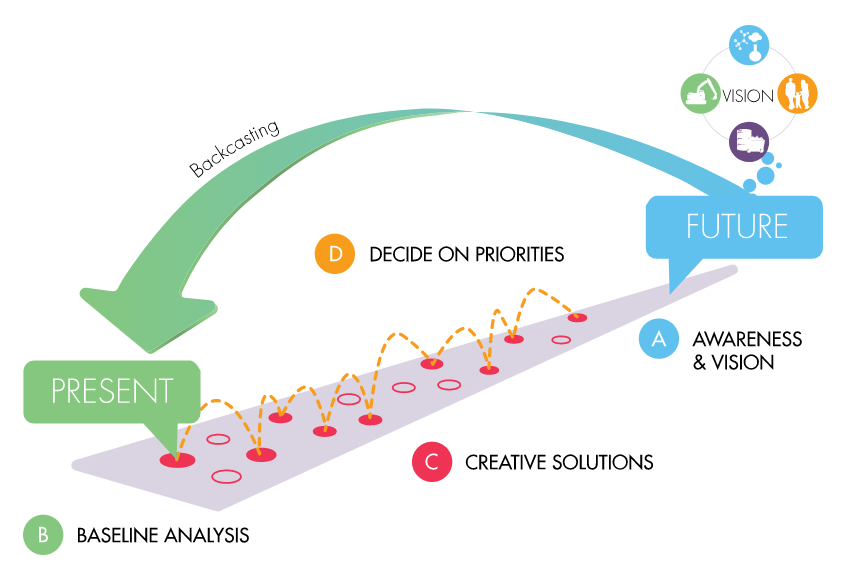
Backcasting begins by imagining a desirable future, then working backwards to identify the steps needed to get there. It shifts the perspective from: > What will happen?
to: > What could we create?
YOUTUBE DeDm-HTFuiY
Backcasting from Success - youtube
In contrast to Forecasting, which extends from the present, backcasting is goal-driven. It is often used in sustainability planning and innovation strategies, where the future vision shapes the present agenda.
Backcasting encourages participants to ask: > What must change today to make this vision possible tomorrow?
# Backcasting vs Scriptwriting
Backcasting is very close to a scriptwriting move called “reverse plotting”: decide how the story ends, then design the turning points that must have happened earlier, and keep working back until you reach the opening scene - wikipedia
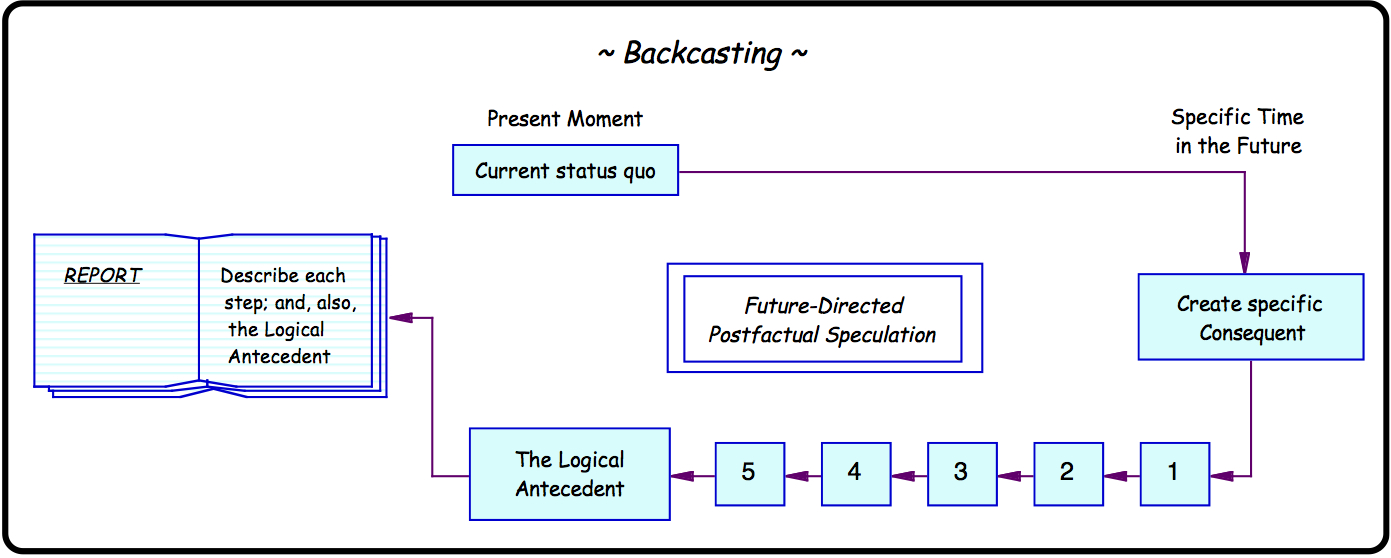
Temporal representation of backcasting - wikipedia
The difference is that scriptwriting is usually about one authored narrative arc, while backcasting is usually about a shared plan (often with multiple pathways, risks, and trade-offs) that a group can commit to and revisit.
# See
- Backcasting the Future
- Backcasting Workshop and Backcasting as Theatre
- Free Cities Podcast: 099 - Dr. David Bovill: Future States, Regenerative Cities & Open Source Law, 11. Okt. 2024 - podcast
- Future-Oriented Planning
- Bring Back from the Future
- Backcasting - erc.undp.org and assets ]