
Step D is the move from a portfolio of ideas to a prioritised plan. It turns the strategic aims into coordinated action, with clear choices about what to do first.
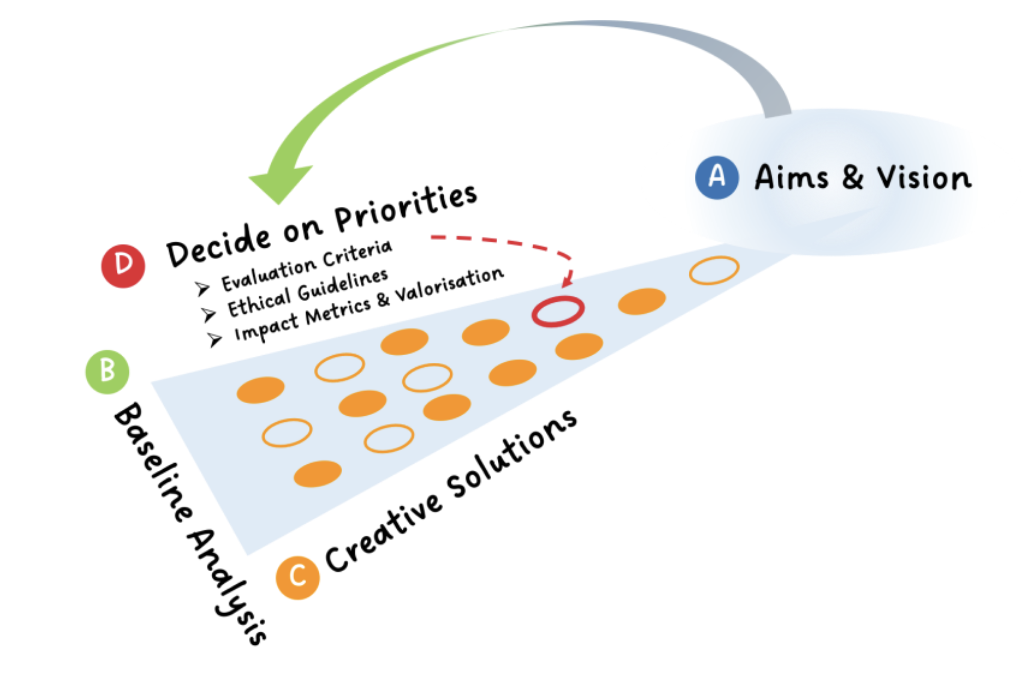
Step D = Decide on Priorities of the Backcasting Workshop - pdf 
This step works best when there is a strong, robust network of stakeholders who can carry the work: practitioners, researchers, funders, public institutions, and civil society. This network needs coordination support from an associative body or backbone organisation that can convene events, maintain continuity, and enable ongoing knowledge exchange.
A well-supported network is better able to prioritise actions that will have the most impact. This often means choosing actions that either address urgent needs in the community of practice, or strengthen existing initiatives so they can achieve their intended outcomes more effectively.
It is also necessary to agree how priorities will be set. That means defining evaluation criteria, ethical guidelines, and impact metrics, including what counts as value and how impact is recognised and recorded. Creating this guidance is often one of the first concrete actions the network takes, because it becomes the shared decision-making machinery for everything that follows.