
Step A is the start of a backcasting approach. Before you plan actions, you first define the shared aims and the future vision you want to work backwards from.
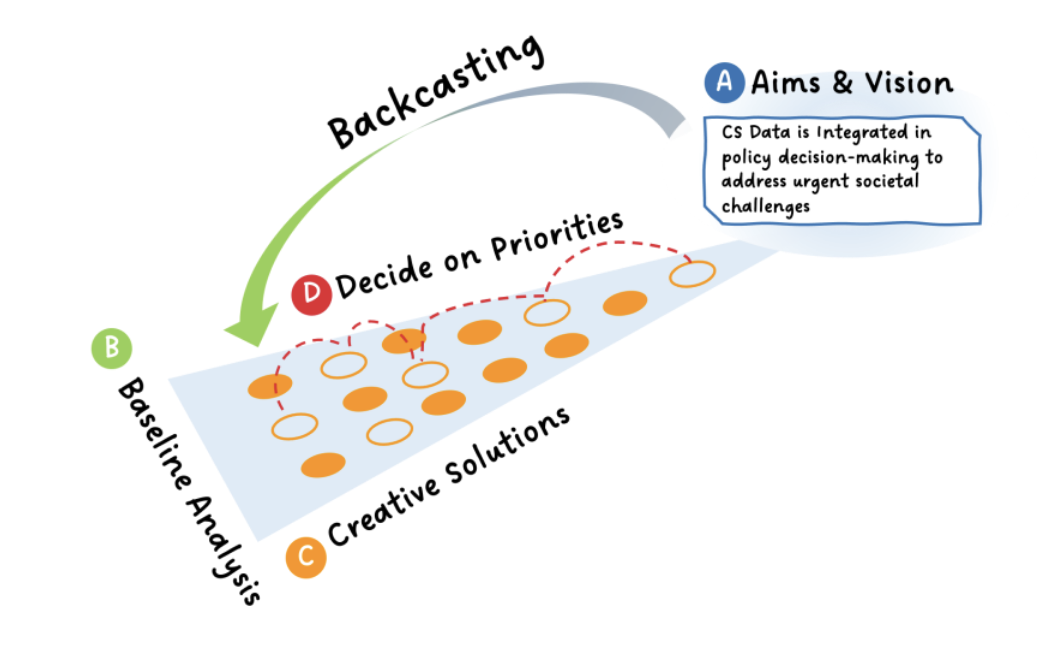
Step A: Aims and Vision of the Backcasting Workshop - pdf 
This step should be done collaboratively with key stakeholders across science, policy, and society. The goal is to agree what “success” looks like in your context, and why it matters.
To do this well, launch and maintain an ongoing dialogue with as wide a range of actors as possible. This is often described as a “quadruple helix” of stakeholders: public institutions, research and education, business and industry, and civil society. The point is not to tick boxes, but to build legitimacy, shared ownership, and a practical understanding of what different groups need.
A core output of Step A is a shared working definition of the field you are trying to support. The definition should be instrumental: it should reflect your objectives, the ways the work will be used, and the levels of participation you want to encourage. It should be broad enough to include the range of relevant practices, while still being clear enough to guide decisions about quality, ethics, and evaluation.
Be explicit about the range of activities you intend to encourage and support, and ground this in your cultural, scientific, and socio-political context. Also agree the values you want to protect, and how quality will be defined, monitored, and evaluated.
The output of Step A is a short statement of aims, a shared vision of the desired future, and a practical definition and quality frame that will guide the later steps.
# See - Next => Baseline Analysis - Backcasting and the Backcasting Workshop