
A useful second step in any programme is to build an inventory, sometimes called a landscape report. This is a structured scan of what already exists across the field: projects, communities, tools, organisations, methods, resources, and informal practices.
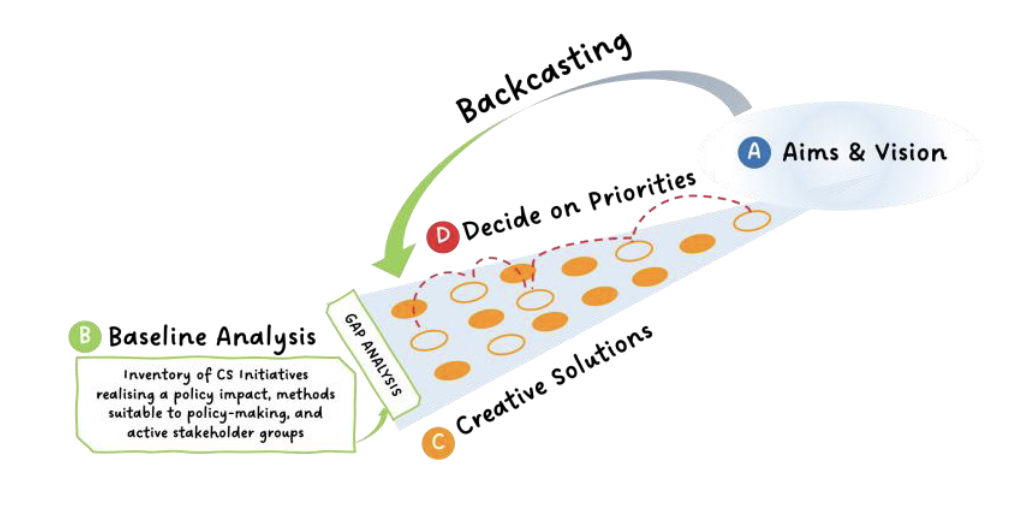
Step B = Baseline Analysis of the Backcasting Workshop
The inventory should include “invisible” work: activity that clearly belongs in the space, but does not use the same label, jargon, or branding. This is especially common in local languages, grassroots activity, and bottom-up initiatives, where people are doing the work without adopting the umbrella term.
While building the inventory, also note the support mechanisms that already exist, such as networks, platforms, funding routes, training programmes, shared standards, and existing institutions that provide coordination or legitimacy. Collect success stories that could be scaled up, and make them visible to the decision makers who can extend their impact, while being explicit about the kind of impact achieved (for example policy change, operational improvements, community outcomes, or published knowledge).
After the inventory, run a gap analysis. A gap analysis is a deliberate comparison between what exists now and what would be needed to reach the desired outcomes. It identifies missing enabling factors: capabilities, resources, governance, incentives, infrastructure, skills, partnerships, legal permissions, standards, and feedback loops.
A practical way to do this is to focus the inventory on examples that already achieve the kind of impact you care about, then extract the methods, protocols, and enabling conditions that made that impact possible, and finally map which actors and stakeholders are already active in the space. The gaps are whatever is missing to make those enabling conditions normal rather than exceptional.
# See - Next => Creative Solutions - Backcasting and the Backcasting Workshop