
A seat of government is the place — often a city, complex of buildings, or specific building — from which political authority is exercised. It may be literal (a capitol building, parliament) or symbolic (the city or region that is the administrative centre).
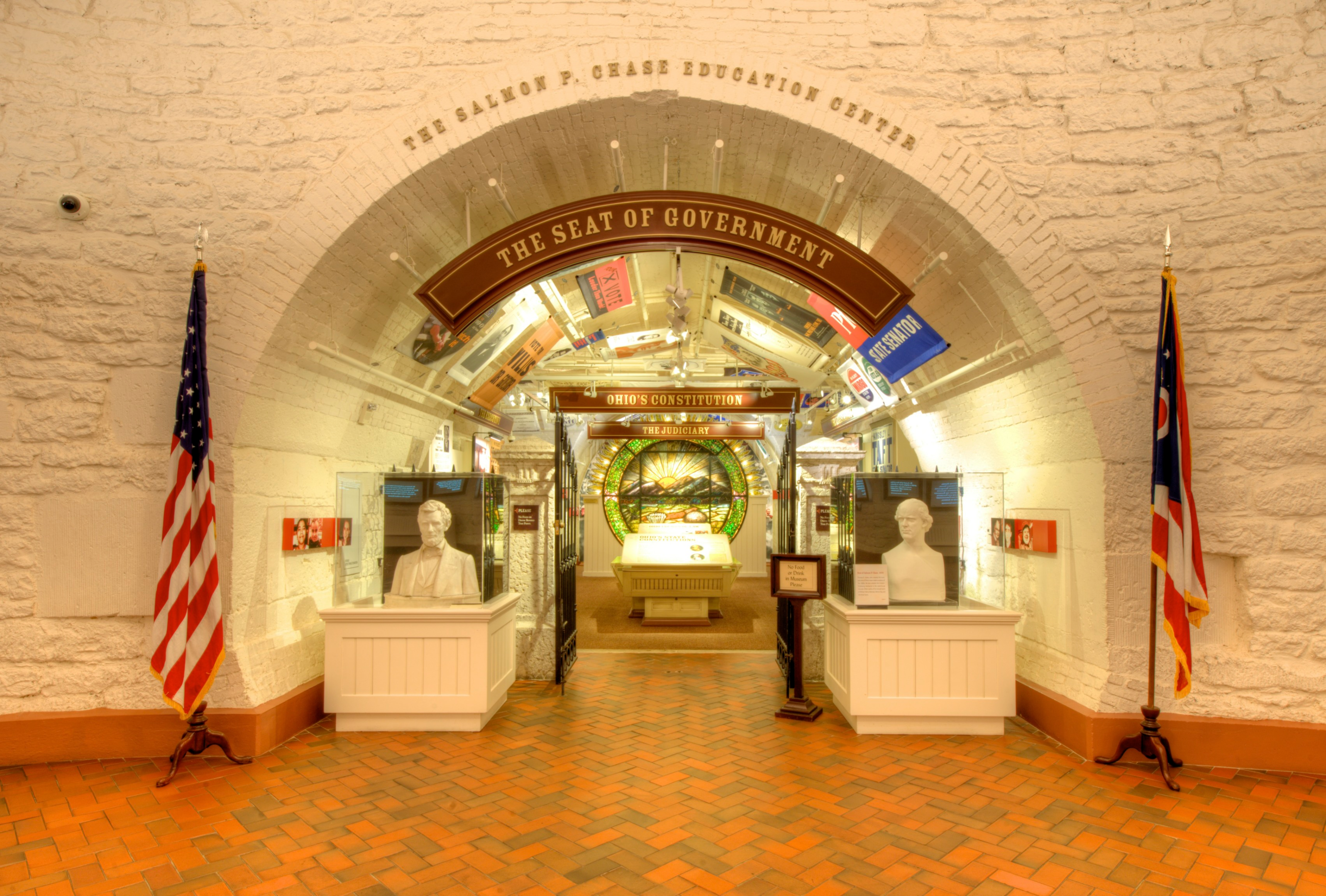
Entrance to the Ohio Statehouse Museum Education Center displaying the phrase "The Seat of Government source 
This concept carries architectural, legal, cultural, and symbolic weight. It was mainly first used in a US context in a move from the idea of a King to that of the people.
## What We Know - The U.S. Constitution uses the phrase explicitly: *Article I, Section 8, Clause 17* refers to “such District … as may … become the Seat of Government of the United States”. - In Australia, the **Seat of Government Act 1904** formally proposed Dalgety, New South Wales, as the “seat of government of the Commonwealth”. Later another Act selected Canberra.
# Notable Seats Here are some well‑known “seats of government” (cities or buildings) that illustrate how the idea has been realised physically or politically: - **Palais Bourbon**, Paris, France — the meeting place of the National Assembly (lower chamber of the French Parliament). - **Old Parliament House, Canberra, Australia** — served as seat of the Parliament of Australia from 1927 until 1988. - **National Diet Building**, Tokyo, Japan — home of Japan’s legislature. - **Palazzo Pubblico**, Siena, Italy — historic town hall and seat of government for the Republic of Siena.
I could **not locate a definitive first published work** that uses *“seat of government”* in its modern constitutional / political‑sense before late 18th‑century usage in the U.S. The phrase appears clearly in **Residence Act (1790)** and constitutional law contexts. Earlier usage may exist but is harder to trace unambiguously.
# See Also - Phylai and Tribes - Democratic Layers - Kleisthenes and Jerry-Mangling - Seat of Government Clause (US Constitution)