
Step C is the creative design phase where you turn what you learned in the baseline and gap analysis into practical action. The goal is not to pick one “best idea” immediately, but to generate a wide set of options and assemble them into a coherent strategy.
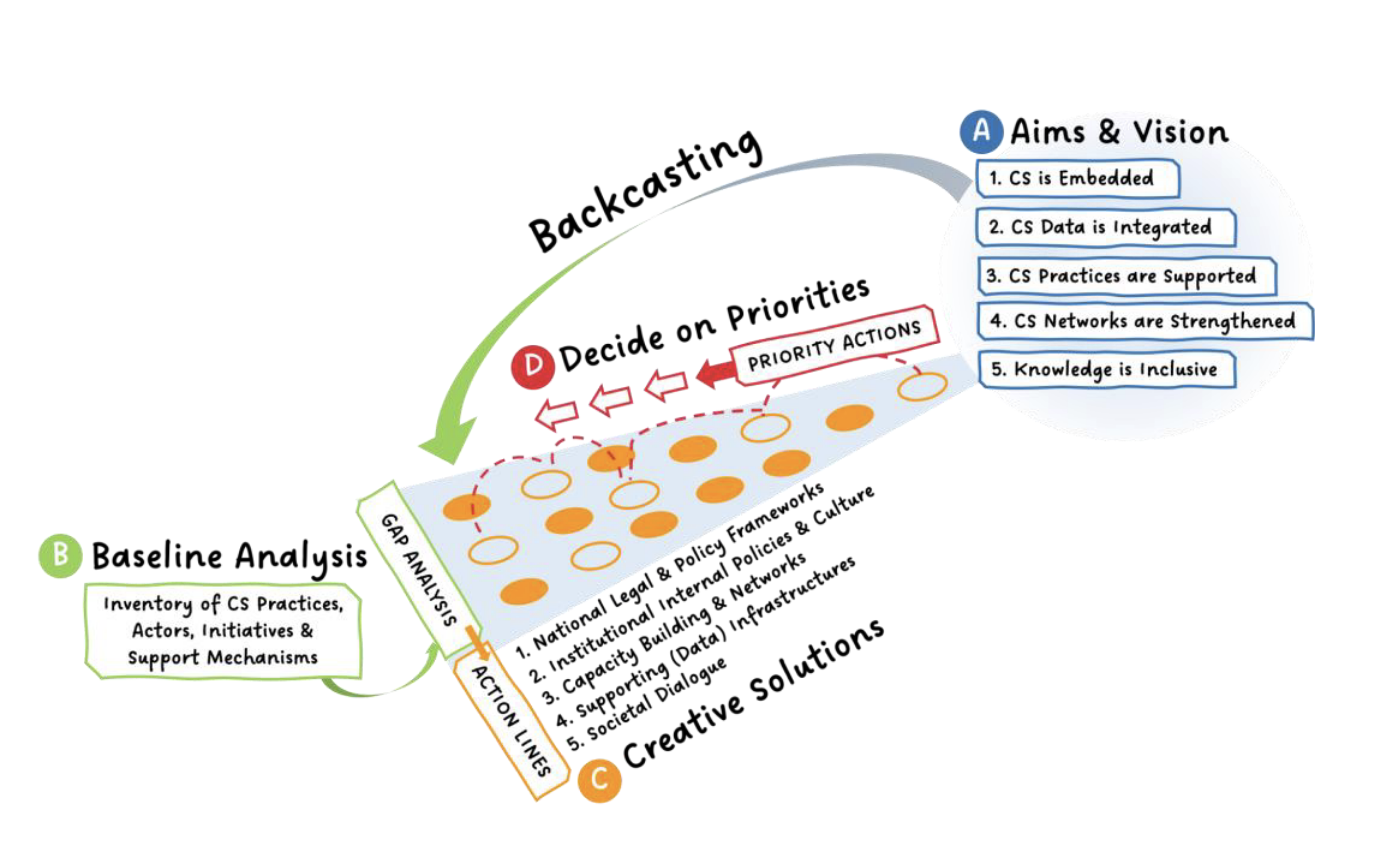
Step C = Creative Solutions of the Backcasting Workshop - pdf 
A good starting move is to form multi-stakeholder groups as broadly as possible. These groups should include the people affected by the problem, the people who can change the system, the people who hold relevant expertise, and the people who will maintain the work over time. The purpose is co-design: to jointly shape actions that address the gaps, and to ensure the right actors are involved to reach the longer-term vision.
Creative solutions should look beyond the “core work” itself and also design the support structures that make the work succeed. This typically includes research or capability support (skills acquisition, training, knowledge exchange) and operational support (community building, communications, facilitation, ethical guidance, legal support, and other enabling conditions).
A helpful way to organise this step is to use an Enabling Factors lens. Treat each gap as a missing enabling factor, then design candidate interventions that would make that enabling factor real, reliable, and widely accessible across the ecosystem.
The output of Step C is a portfolio of strategic action lines: a set of proposed initiatives, pilots, and infrastructure improvements, each with named stakeholders, required support mechanisms, and a clear link back to the gaps they are meant to close.
# See - Next => Decide on Priorities - Backcasting and the Backcasting Workshop